

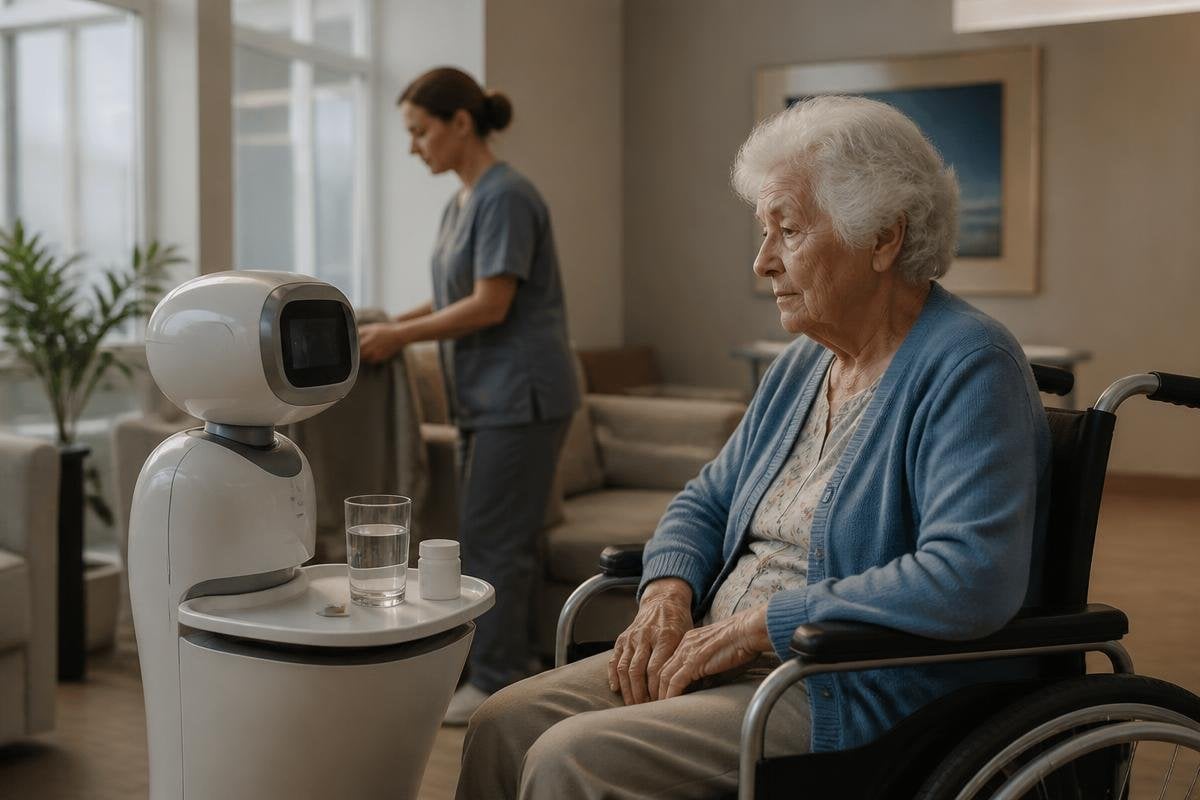
Within seconds, a machine can answer a question, guide a visitor through a building, or remind someone to take medicine. The ethical problem starts when a convenient machine replaces the human contact that gives a task care, judgment, or dignity.
Quick read
- Keep machines on routine tasks where speed and consistency matter.
- Keep a person available when fear, grief, risk, or disagreement enters the exchange.
- Tell people when a machine is handling the first response, and give them a clear way to reach a person.
What the machine can do
Machines work well when the task has a clear goal and a clear limit. A service robot can carry items, answer set questions, record a request, or guide someone to a location. The person gets a quick response, and staff can spend more time on cases that need judgment.
That benefit depends on the task staying within its design. Such a system can follow rules, spot certain inputs, and repeat the same action. It can’t understand a person’s full situation from a short exchange unless its system has been built and tested for that setting.
This matters in places such as hospitals, schools, care homes, banks, and public offices. A missed detail may change the right answer. A person who seems to ask for a form may really be confused, frightened, or unable to explain the problem.
What disappears when contact is removed
Human contact carries more than information. A person can notice a pause, change their tone, ask a useful follow-up, or decide that a standard rule needs a careful review. Those actions may take longer, but they can prevent a small error from becoming a serious one.
People also need to know who is responsible when something goes wrong. The system may give an answer, but an organisation still has to set the rules, check the system, protect personal information, and fix harm caused by a bad result.
The loss can be quiet. A person may stop asking for help after a machine repeats the same answer. Someone with limited speech, hearing, movement, or language access may face extra work at the exact point where help should be easiest.
The ethical question changes when a machine takes a place once held by a care worker or public-service employee. Robot24.com robotics reporting can tie that choice to a named system, setting, and human handoff. Those details lead into the next section, where the setting decides what contact can be replaced.
The line depends on the setting
At a hotel desk, a machine can handle a room number and a printed receipt.
In urgent care, a machine deciding whether a patient receives attention carries a different risk. The hardware may look similar, but the cost of a wrong decision changes the ethical test.
Consent matters too. People should know when they are speaking with a machine, what information it records, and who can review that record. A friendly voice doesn’t remove the duty to explain the system.
The strongest case for human contact appears when a person faces loss, danger, shame, or a choice they may not understand. In those moments, a machine can collect details or summon help, but a person should remain reachable. I’d keep machines as the first layer for routine work, never the final layer for vulnerable people.
A practical decision guide
Use these checks before replacing a human exchange with a machine:
- Name the task: Write down the exact action the machine will take, rather than describing the whole service as automated.
- Rate the harm: Ask what happens if the machine gives the wrong answer or misses a warning.
- Keep an exit: Give people a visible, working route to a person without making them repeat the whole case.
- Explain the system: State that a machine is involved, what data it uses, and how long the record stays.
- Check access: Test the service with people who have different abilities, languages, and levels of technical comfort.
These checks turn a broad ethical concern into a design choice. If the task carries little risk and the handoff works, a machine may be a fair way to reduce waiting. If the task needs trust or careful judgment, keep a person in the exchange.
The next test is simple: after a machine takes the first contact, can a person still get real help before a small problem becomes a larger one?
