

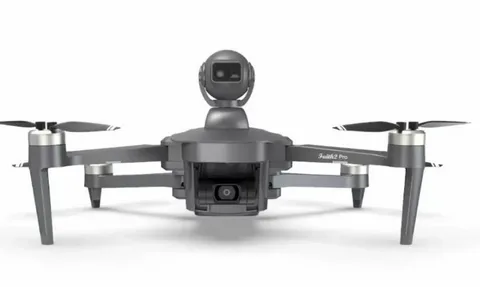
Drones have evolved rapidly from simple hobby gadgets into sophisticated machines used in countless industries—from construction and agriculture to security, logistics, and filmmaking. But no matter how powerful the drone, a consistent challenge has always been avoiding collisions in complex or unfamiliar environments. That’s why demand is surging for the next generation of intelligent UAVs: the drone that avoids obstacles. These advanced drones use real-time sensing and AI to automatically detect and dodge obstacles—making them smarter, safer, and far more efficient. A leading solution in this space is MRDVS’s 3D obstacle avoidance technology, designed to empower drones with advanced spatial awareness and safe, autonomous navigation.
This article explores how these obstacle-avoiding drones work, the core technologies behind them, real-world use cases, and the game-changing benefits they offer for businesses and drone professionals alike.
What Makes a Drone Truly Obstacle-Aware?
A drone that avoids obstacles is equipped with sensors and software that enable it to “see” the environment, detect objects in its flight path, and automatically adjust its trajectory. These drones no longer rely solely on GPS or human intervention—they process visual or distance data in real time and take corrective action to prevent crashes.
Obstacle-aware drones combine the following technologies:
- 3D depth cameras
- Stereo vision or LiDAR
- Ultrasonic or infrared proximity sensors
- AI-based flight control software
These features allow the drone to intelligently navigate tight spaces, operate indoors, fly through unpredictable terrains, and even complete missions in GPS-denied zones.
How Does Obstacle Avoidance Work?
The obstacle detection system on a drone works much like a human’s visual-spatial awareness. Sensors collect data about the drone’s immediate environment—such as walls, poles, trees, or moving objects—and send it to an onboard processor. The software then makes real-time decisions:
- Is the obstacle moving or stationary?
- What is the distance to the obstacle?
- Can the drone go around, over, or under it?
- Is there a safer alternate flight path?
Based on this, the drone either halts, reroutes, or gently adjusts its flight path without requiring pilot intervention.
Benefits of a Drone That Avoids Obstacles
Adopting an obstacle-avoiding drone has far-reaching benefits in terms of safety, performance, and operational efficiency.
- Collision-Free Flights
Avoid accidents with structures, power lines, trees, or people—especially critical in tight urban or indoor environments. - Ideal for Autonomous Operations
Enables drones to carry out complex, GPS-independent missions with minimal supervision or pre-mapped routes. - Greater Precision
Fly closer to objects safely, allowing for better data capture in inspection, mapping, or cinematography tasks. - Lower Maintenance Costs
Fewer crashes mean fewer repairs and longer drone lifespans—cutting operational costs over time. - Enhanced Usability for New Pilots
Smart obstacle avoidance gives beginners confidence to fly drones safely without deep piloting skills.
Use Cases Across Industries
Construction and Infrastructure Monitoring
Drones are commonly used on construction sites to inspect tall structures, cranes, or scaffolding. A drone with obstacle avoidance can fly near these obstacles without the risk of collision, providing safer and more detailed inspection footage.
Warehouse and Inventory Automation
In large warehouses, drones with 3D vision systems can autonomously fly through aisles, scan barcodes, or count stock levels—all while avoiding shelves, beams, or moving forklifts.
Agriculture and Forestry
In fields or wooded areas, a drone that avoids obstacles can navigate rows of crops or trees while performing tasks like spraying, imaging, or crop monitoring, even in dense or irregular terrain.
Emergency Response and Rescue
In disaster-hit zones or collapsed buildings, GPS may be unavailable and the environment cluttered. Obstacle-avoiding drones help locate survivors or assess damage without risking human life.
Cinematic and Live Event Filming
Professional drone pilots often work in dynamic environments. An obstacle-aware drone allows them to focus on capturing the perfect shot, while the system handles collision avoidance autonomously.
Comparing Obstacle Avoidance Technologies
| Technology | Accuracy | Range | Best Use Case |
| Stereo Vision | Moderate | Short to Medium | Indoors, close object detection |
| LiDAR | Very High | Medium to Long | Surveying, construction, forest mapping |
| Ultrasonic Sensors | Basic | Short | Indoor proximity detection |
| 3D Depth Cameras | High | Medium | Navigation, inspection, warehousing |
Each type of sensor has its strengths. Many advanced drones combine several technologies to offer multi-directional obstacle detection—forward, backward, up, down, and side sensing—for full 360° awareness.
What to Look for in an Obstacle-Avoiding Drone
If you’re considering a drone that avoids obstacles for your business or projects, here are key features to evaluate:
- Sensor Type & Coverage: Does it detect obstacles in all directions?
- Real-Time Response: How fast does it process and react to obstacles?
- Environment Adaptability: Can it fly in low-light, rain, or dusty conditions?
- GPS Independence: Can it navigate safely even without satellite signals?
- Battery Life: Does obstacle processing reduce total flight time?
Also consider payload compatibility (camera mounts, sensors), mission customization (pre-set paths vs. dynamic mapping), and software integration (can it connect to your platforms like GIS, CAD, or cloud storage?).
Real-World Case Study: Drone Inspection in Oil Refinery
An energy company used an obstacle-avoiding drone to inspect a large oil refinery. Traditional inspections took weeks and posed safety risks. With a 3D-mapping drone equipped with LiDAR and stereo vision, the company conducted inspections in under two days. The drone autonomously avoided pipes, beams, and tanks while collecting high-resolution imagery—saving $40,000 in manpower and preventing hazardous exposure.
Future Trends in Obstacle Avoidance for Drones
As AI and machine vision continue to evolve, obstacle avoidance systems will become even more accurate, faster, and smarter. Here’s what’s ahead:
- Neural Network Integration: AI will allow drones to learn from previous flights and improve future navigation.
- Edge Processing: Onboard chips will process sensor data faster without relying on cloud latency.
- Swarm Coordination: Multiple drones will navigate safely together, even in tight airspace.
- Mixed Reality Interfaces: Pilots will interact with virtual flight environments to pre-test paths and avoid obstacles before takeoff.
Conclusion
A drone that avoids obstacles isn’t just a cool upgrade—it’s a transformative innovation that improves safety, expands flight potential, and empowers businesses to use drones more effectively. Whether you’re operating in a warehouse, out in the field, or on a movie set, obstacle avoidance can save time, money, and resources while delivering better results.
As drone missions get more complex and environments more unpredictable, investing in smart navigation systems is no longer optional—it’s essential. Start exploring the potential of obstacle-aware drones with systems like those from MRDVS that bring real-world solutions to advanced aerial navigation.
