

In today’s world, precision in positioning technology is more critical than ever. From surveying and construction to agriculture and autonomous vehicles, having accurate location data can make all the difference. One technology that has gained significant attention is RTK GPS. But what makes rtk gps more accurate than traditional GNSS? Let’s explore.
Understanding Traditional GNSS
Global Navigation Satellite Systems (GNSS) like GPS, GLONASS, Galileo, and BeiDou provide users with location information based on signals from orbiting satellites. Traditional GNSS receivers calculate positions using signals from multiple satellites, but they are subject to various errors. Factors such as atmospheric delays, satellite clock errors, and signal multipath can reduce positioning accuracy, often limiting traditional GNSS to a precision of several meters.
How RTK GPS Works
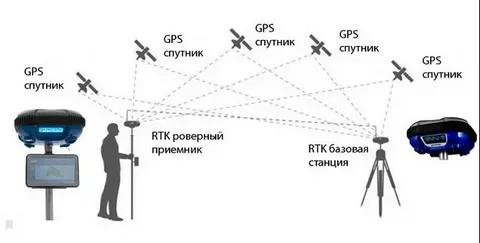
Real-Time Kinematic (RTK) GPS enhances positioning accuracy by using a fixed base station in conjunction with a mobile rover. The base station knows its exact location and calculates the errors in the satellite signals. It then transmits this correction data to the rover in real-time, allowing the rover to achieve centimeter-level accuracy. This method effectively minimizes the errors that traditional GNSS receivers cannot correct on their own.
Key Advantages of RTK GPS
1. Centimeter-Level Precision
One of the primary reasons what makes RTK GPS more accurate than traditional GNSS is its ability to achieve centimeter-level precision, compared to the meter-level accuracy of standard GNSS. This makes RTK GPS ideal for applications requiring exact measurements, such as land surveying and precision agriculture.
2. Real-Time Corrections
Unlike traditional GNSS, RTK GPS provides real-time error corrections. This allows operators to make immediate adjustments and ensures higher reliability in dynamic environments.
3. Reduced Error Sources
RTK GPS effectively compensates for atmospheric delays, satellite clock inaccuracies, and multipath errors. By addressing these error sources in real time, RTK technology ensures superior positioning performance compared to traditional GNSS systems.
Applications Benefiting from RTK GPS Accuracy
Several industries rely on RTK GPS due to its enhanced accuracy:
- Construction: Precise machine guidance reduces material waste and improves project efficiency.
- Agriculture: Enables precision farming practices such as accurate planting and fertilization.
- Surveying and Mapping: Ensures exact measurements for land development and boundary marking.
- Autonomous Vehicles: Provides critical positioning data for navigation and safety.
Conclusion
Understanding what makes RTK GPS more accurate than traditional GNSS highlights the importance of real-time corrections, reduced error sources, and centimeter-level precision. As industries continue to demand higher accuracy and reliability, RTK GPS stands out as a superior positioning technology compared to standard GNSS solutions. For anyone requiring precise location data, RTK GPS is no longer just an option—it’s a necessity.
