

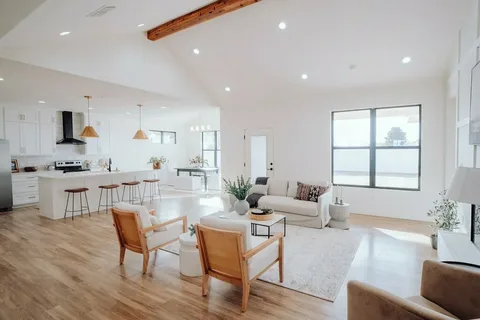
The debate between open floor plans and defined spaces has dominated residential design discussions for years. Both layouts offer distinct advantages, and the right choice depends entirely on your lifestyle, family needs, and how you actually use your home. Understanding the pros and cons of each approach helps you create a space that truly works for you.
Open floor plans surged in popularity over the past two decades, and for good reason. They create a sense of spaciousness that makes homes feel larger than their actual square footage. When designing custom homes Park City, architects often incorporate open layouts to maximize natural light and mountain views. The flowing nature of open spaces allows visual connections across the home, making it easier to supervise children while cooking or stay connected with guests during gatherings.
The social benefits of open floor plans are undeniable. Hosts can prepare meals while conversing with guests instead of being isolated in a closed kitchen. Parents can keep eyes on young children playing in the living room while working in the adjacent dining area. This connectivity fosters family bonding and makes homes feel more welcoming for entertaining. Natural light flows freely through open spaces, reducing the need for artificial lighting during daytime hours and creating brighter, more cheerful environments.
However, open floor plans come with significant drawbacks that homeowners sometimes discover too late. Sound travels freely through open spaces, meaning kitchen noise disrupts television watching, and conversations in one area disturb activities in another. The lack of walls makes it challenging to create private spaces for phone calls, homework, or simply escaping household chaos. Temperature control becomes more difficult because heating or cooling large open volumes requires more energy than conditioning separate rooms.
Defined spaces offer privacy and quiet that open plans cannot match. Individual rooms allow family members to pursue different activities simultaneously without disturbing each other. Children can practice musical instruments while adults work from home. Someone can watch an action movie at full volume while another person reads peacefully in a quiet study. This separation becomes increasingly valuable as children grow older and need independent space for schoolwork and social activities.
Traditional layouts with defined rooms also provide better opportunities for personalized design. Each room can have its own style, color scheme, and purpose without needing to coordinate with adjacent spaces. Wall space for furniture placement and artwork becomes abundant. Storage options multiply when rooms have four complete walls instead of just partial barriers. Many people find that defined spaces feel cozier and more intimate than vast open areas.
The formality and structure of defined spaces appeals to many homeowners. Formal dining rooms create special occasions out of family meals. Dedicated home offices maintain professional boundaries between work and home life. Guest rooms with doors provide privacy for visitors. These defined purposes help organize daily routines and create mental separation between different activities.
When considering residential layout design principles, think about your actual living patterns. Do you cook elaborate meals requiring full attention, or do you prefer staying connected with family while preparing simple dinners? Do household members have conflicting schedules requiring simultaneous different activities? How often do you entertain large groups versus intimate gatherings?
Hybrid approaches offer the best of both worlds for many families. Partial walls, columns, or strategic furniture placement can define zones within open spaces without completely closing them off. A kitchen island creates separation between cooking and living areas while maintaining visual connection. A half-wall or different flooring materials can designate the dining area without building full partitions. These subtle boundaries reduce some open plan drawbacks while preserving the spacious feel.
Flexible spaces adapt to changing needs over time. Sliding barn doors, pocket doors, or folding glass partitions allow you to open spaces for gatherings and close them for privacy as needed. This flexibility is particularly valuable for families whose needs evolve as children grow or work-from-home requirements change. Multi-purpose rooms that serve different functions throughout the day maximize space efficiency in smaller homes.
Your home’s architectural style influences which layout works best. Contemporary and modern homes typically embrace open floor plans that complement their clean, minimal aesthetic. Traditional and historic home styles often look more appropriate with defined rooms that match their original character. Forcing an open plan into a Victorian home or creating formal separated rooms in a contemporary structure can feel jarring and inauthentic.
Consider resale implications when making layout decisions. While open floor plans remain popular with many buyers, defined spaces are experiencing renewed appreciation. Families with teenagers, multi-generational households, and remote workers increasingly value the privacy and flexibility that individual rooms provide. The pendulum is swinging back toward layouts that offer some separation and defined purpose.
Climate and geography also play roles in layout decisions. Open plans work beautifully in mild climates where consistent temperatures throughout the home aren’t challenging. In regions with harsh winters or hot summers, defined spaces with doors allow zone heating or cooling, reducing energy costs. Homes in understanding climate-responsive design benefit from layouts that work with rather than against local conditions.
The right layout ultimately depends on honest assessment of your lifestyle priorities. There’s no universal best choice, only the layout that fits how your family actually lives. Take time to evaluate your daily routines, future needs, and what matters most to you. The perfect floor plan is the one that supports your life rather than forcing you to adapt to its limitations.
